
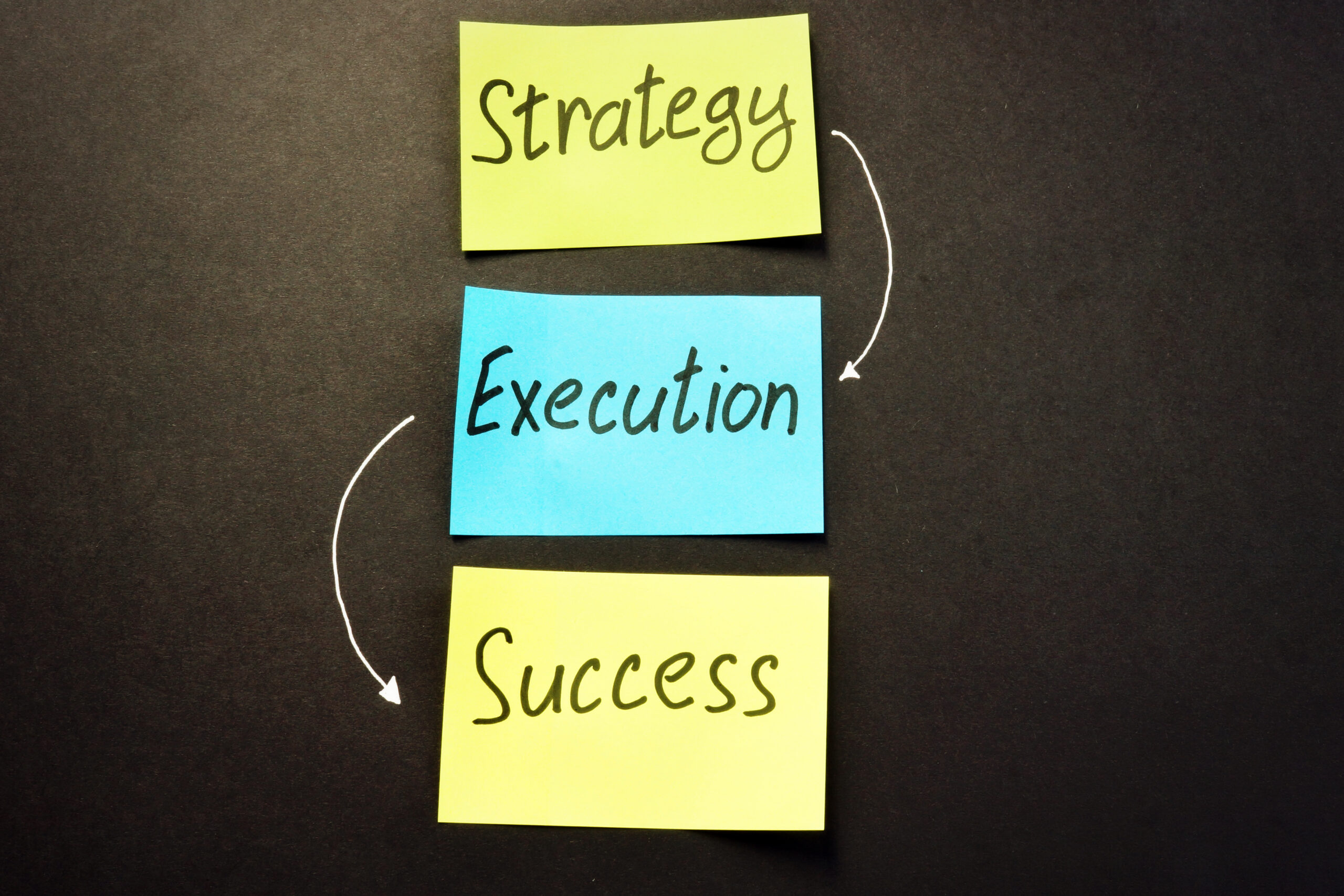
For much of the past two decades, strategy has occupied a privileged position in corporate governance. Boards dedicate increasing amounts of time to market positioning and long-term vision development and portfolio logic and growth narrative creation because they believe strategy approval will result in automatic execution success. This assumption is no longer valid.
The organizations which will outperform others in 2026 will succeed because of factors which differ from those which make other organizations structurally weak. The organization achieves its goals through its quick decision-making system which produces accurate results when the situation becomes critical. Execution has ceased to be a downstream activity. The main obstacle which prevents value growth has emerged as the primary limitation.
The document contains evidence which shows that execution needs its own separate governance system instead of being managed through organizational processes. Leaders who approve strategies need to maintain organizational structures which do not fulfill current business needs. The process leads to a progressive deterioration which starts with plan-outcome discrepancies that grow larger while leaders need to step in more often and decisions take longer to make and staff members lose trust in their organization. Financial indicators show these weaknesses only after strategic optionality has reduced to its most limited state.
The business environment of 2026 operated under different conditions than those which existed during the previous expansion period. Capital investors have become more choosy because they now accept less market uncertainty while facing higher expenses from delayed investments. The market system operates at a speed which exceeds the time required for governance systems to complete their cycles. The time period which used to span multiple quarters now requires companies to respond within a weekly timeframe. The organization now operates with higher complexity levels while its ability to make mistakes has become more limited.
The system functions under particular conditions which make it impossible to achieve execution efficiency through market growth or outside market influences. The situation inside the situation has become more severe. The delay or weakening of decisions together with unclear ownership of decisions leads to distorted priorities which redirect leadership focus while creating enduring organizational barriers.
The first signs of organizational change prove difficult for boards to detect because they appear as weak and unobtrusive indicators. The organization shows signs of being actively involved. Leadership teams are busy. Reports are produced. Meetings multiply. Yet momentum weakens. Initiatives drift. The delay between planned actions and actual results occurs because the organizational system which translates decisions into operational actions lacks both speed and clear direction and proper performance tracking.
The 2026 execution process usually lacks any kind of intense or explosive moments. The process advances through time while it builds up in a way which people cannot see until the needed repairs start to cost too much.
The strategy approval process creates a long-term governance issue because organizations do not understand it represents the final stage of their decision-making system. The execution risk reaches its peak during this period.
After boards approve strategies, they tend to focus on different matters while trusting their management team to carry out the approved plans. Leadership teams inside the organization go through a change in their mental perspective. The work feels complete. The strategic debate is closed. The last stage requires execution of all plans which were developed throughout the process.
What is frequently missing at this moment is a corresponding redesign of how execution will occur. Ownership remains implicit. The essential matters list continues to expand instead of decreasing in size. The organization operates its existing legacy programs as usual while it begins implementing new initiatives. The tracking system of KPIs monitors results which become visible only after the implementation of corrective measures has become irrelevant. The review process occurs every quarter, but the team needs to check for deviations on a weekly basis.
The system generates a consistent pattern which starts with positive expectations before performance deteriorates and projects experience delays until it reaches its final point of complete failure. The failure of strategy occurs because it relies on false data. The organization failed to deliver the plan because it did not have basic structural elements which would have enabled the initiative to progress.
The board needs to address this essential knowledge gap which affects their decision-making process. Organizations which obtain strategic clarity remain vulnerable to execution breakdowns. It needs to be governed through purposeful action.
People use cultural and behavioral descriptions to explain Execution through their emphasis on discipline and accountability and focused work. These elements hold importance, yet they do not suffice. The system of Execution consists of five essential elements which include decision rights and information flow and incentives and cadence and escalation mechanisms.
Organizations which execute their tasks with reliability base their decision ownership on direct assignment rather than on assumptions. The group needs to choose one member who will take responsibility for accountability duties because this task should not be shared with all members. The review process includes enough rhythm checks to detect any deviations which will appear during the assessment. Information moves directly to the top without any blocking or time delays. The process of escalation follows established procedures instead of political decisions.
The execution process fails to produce results when these conditions become active. The group makes decisions together, but no one clearly takes responsibility for them. The system distributes responsibility through channels which create obstacles for performing any necessary corrections. Performance indicators present results after events happen, but they do not assist organizations in their ability to make prompt control choices. The situation continues without resolution because there exists no person who possesses both the power to act and the duty to intervene.
These are not cultural accidents. They are design outcomes.
The frontline does not experience execution breakdowns according to most people's understanding. The system fails at its leadership level because leaders must transform their decisions into functional resources and communication systems.
Leadership teams unintentionally decrease execution performance through their acceptance of ownership confusion and their practice of using consensus instead of accountability and their assignment of multiple responsibilities to executives which exceed their ability to manage. The duration needed for decision-making activities grows longer with each successive period. Initiatives accumulate. Trade-offs are avoided. The organization takes defensive measures through risk reduction and reduced speed and maintained flexibility which results in delayed advancement.
The boards fail to detect this decline because they only receive combined data reports. Variance is explained rather than addressed. Slippage is framed as temporary. The fundamental reasons which lead to execution failure become completely entrenched when the failure becomes impossible to deny.
Execution breakdown is not usually the result of poor intent. The system maintains existing ambiguity because its design structure allows it to do so.
Organizations which detect deviations rapidly and execute immediate decisions and corrections gain competitive advantage through their ability to do so. The process of Execution velocity requires speed but does not involve any form of urgency. The main goal is to minimize the time delay which exists between when a signal is received and when an action takes place.
Organizations with high execution velocity operate on current information. They initiate modifications before problems develop into more severe issues. They learn faster than competitors. Organizations with low execution velocity continue to use their outdated beliefs even though they have an accurate strategic direction.
The difference between these two terms holds significance because the speed at which organizations execute their plans will multiply over time. The speed at which we receive feedback directly enhances our ability to make better decisions. The process of making better decisions leads to increased self-assurance. Confidence reduces hesitation. Organizations which operate at different speeds have experienced their distance from each other grow substantially throughout history.
Boards need to assess execution speed as an operational capability which they can quantify instead of treating it as an ambiguous trait.
The process of transformation leads to major alterations which create deep impacts. Execution can no longer be delegated entirely to operations. The organization needs to create an active system which operates under top-level governance.
CEOs of today need to fulfill two fundamental duties which involve creating strategic plans and constructing operational systems for execution. The success of these systems depends on organizations to define decision rights clearly and to enforce accountability and perform execution reviews effectively. CEOs who directly handle situations or allow unclear circumstances to continue will create obstacles which prevent them from reaching their multiplication targets.
Boards, for their part, must recalibrate how they exercise oversight. A strategy needs to accomplish more than having good ideas to qualify as an effective plan. The organization needs to demonstrate its ability to perform the task which boards should verify. The organization needs to focus on four essential elements which include leadership load and decision architecture and cadence and incentive alignment.
Execution is not an operational detail. It is a governance responsibility.
Organizations which succeed in 2026 will avoid making complete changes to their operations. The organization uses its resources to create fundamental new execution abilities which must be developed for essential operational domains.
They narrow priorities aggressively. The document proves ownership of property, but it fails to demonstrate any evidence of criminal responsibility. They shorten review cycles. The team detects issues right away before they become major problems through their prompt response. The system operates as an active control system which uses execution data instead of using it as a passive tool for reporting.
Most importantly, they recognize that execution is not something to be demanded from the organization. It is something to be enabled through structure.
In 2026, execution is no longer evidence that a strategy is working. It is the strategy.
Leaders who understand this reality at its beginning will protect their organization from losing its flexibility and maintain both trust and stability. Organizations which maintain execution as their final priority will experience an irreversible decline which strategic improvements cannot prevent.
A strategy which lacks execution power becomes identical to empty intentions which fail to produce any results. Organizations which transform their decision-to-action process will achieve superior results because their operational efficiency surpasses their ability to make better choices.
International Executive Consulting provides its services to CEOs and their boards and investors who need help transforming their leadership systems and execution methods and governance frameworks during times of high pressure. The operators at IEC who have experience establish defined accountability systems which help organizations turn their strategic plans into measurable achievements through fast decision-making.
Author: Cyril Moreau
At International Executive Consulting, we excel in driving business transformation and organizational change - enhancing corporate performance while optimizing efficiency.